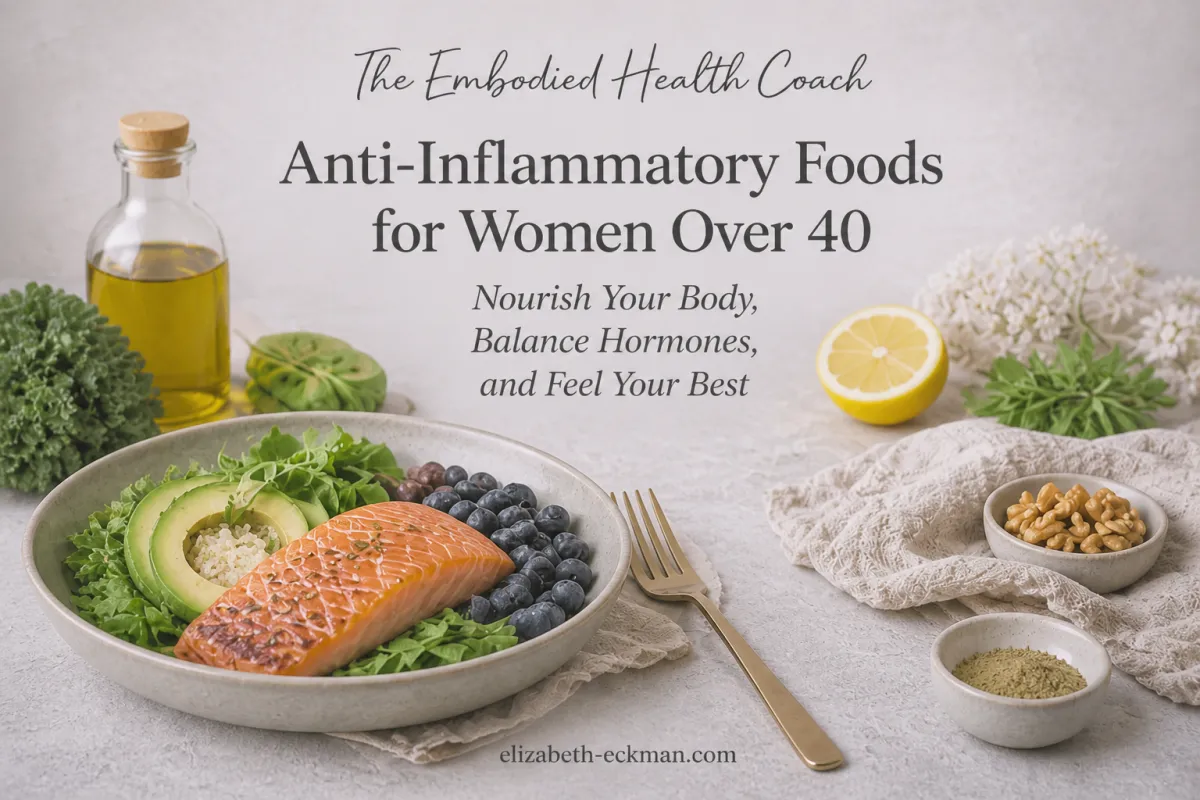
Anti-Inflammatory Foods for Women Over 40 (Simple Swaps That Make a Difference)
If your body has been feeling a little heavier lately, more reactive, or slower to recover than it used to, it’s worth paying attention.
Not in a critical way. Just with curiosity.
Because for many women, especially in their 40s and beyond, this is where inflammation begins to show up more clearly.
It doesn’t always feel dramatic. It can be subtle. A bit more fatigue. A bit more brain fog. A bit more sensitivity to foods or stress.
And often, it’s your body asking for a different kind of support.
Why Inflammation Matters More After 40
As you move through midlife, your body becomes more responsive to what’s happening internally and externally.
Hormonal shifts, changes in sleep, increased stress, and even years of accumulated lifestyle patterns all begin to influence how your body feels day to day.
Inflammation is part of that picture.
Chronic low-grade inflammation is associated with fatigue, metabolic changes, and hormonal imbalance. [S1]
Source: National Institutes of Health. “Inflammation and Chronic Disease” [S1]
This doesn’t mean something is wrong.
It means your body is asking for more consistent, supportive input.
How Inflammation Shows Up in the Body
Inflammation doesn’t always feel obvious.
It often shows up in ways that are easy to dismiss or normalize.
You might notice:
Low or inconsistent energy
Brain fog or lack of clarity
Digestive discomfort or bloating
Joint stiffness
Skin changes
Increased sensitivity to stress
These symptoms are often connected to how your body is processing food, stress, and hormonal changes together.
When inflammation is present, your system tends to feel less stable.
The Role of Food in Reducing Inflammation
Food is one of the most practical places to start.
Not because it’s the only factor, but because it’s something you engage with every day.
And small shifts here can create noticeable changes over time.
Rather than thinking in terms of restriction, it’s more helpful to think in terms of support.
What can you add that helps your body feel more balanced?
Diet patterns rich in whole foods are linked to lower levels of inflammation. [S2]
Source: National Institutes of Health. “Diet and Inflammation” [S2]
Anti-Inflammatory Foods for Women Over 40
You don’t need a complicated plan.
In fact, the simpler it is, the more likely it is to become part of your routine.
Start by focusing on foods that naturally support your body.
Leafy Greens
Spinach, kale, and rocket are rich in nutrients that support detoxification and overall health.
They’re an easy addition to meals and a simple way to support your system daily.
Healthy Fats
Foods like olive oil, avocado, nuts, and seeds help support hormone production and reduce inflammation.
Omega-3 fatty acids have been shown to reduce inflammatory markers in the body. [S3]
Source: Harvard T.H. Chan School of Public Health. “Omega-3 Fatty Acids” [S3]
Berries
Berries are rich in antioxidants, which help protect your cells from stress and inflammation.
Even a small serving each day can make a difference over time.
Fatty Fish or Plant Alternatives
Salmon, sardines, or plant-based omega sources support brain health, hormones, and inflammation balance.
“Omega-3 fatty acids play a role in reducing inflammation.” [Q1]
Source: Harvard Health Publishing. “Foods that Fight Inflammation” [Q1]
Herbs and Spices
Turmeric, ginger, and garlic have natural anti-inflammatory properties.
Curcumin, found in turmeric, has been shown to have anti-inflammatory effects. [S4]
Source: National Institutes of Health. “Curcumin: A Review” [S4]
Simple Swaps That Make a Real Difference
This is where things become practical.
Because you don’t need to overhaul everything overnight.
You just need to start shifting patterns.
You might begin by:
→ Swapping processed snacks for whole food options
→ Adding greens to one meal each day
→ Using olive oil instead of refined vegetable oils
→ Including protein and healthy fats in breakfast
These are small changes.
But when done consistently, they help stabilize energy, reduce inflammation, and support hormone balance.
What to Reduce (Without Being Restrictive)
It’s not about cutting everything out.
But it can help to be aware of what tends to increase inflammation.
Highly processed foods, excess sugar, and refined oils can all contribute to inflammation when consumed regularly.
Diets high in ultra-processed foods are associated with increased inflammation. [S5]
Source: British Medical Journal. “Ultra-Processed Foods and Health Outcomes” [S5]
The key is balance.
Not perfection.
A More Sustainable Approach
This isn’t about following a strict plan.
It’s about building a way of eating that supports your body long term.
That means:
Choosing foods that feel nourishing
Creating meals that are simple and satisfying
Allowing flexibility without guilt
When your approach feels sustainable, it becomes something you can maintain.
And that’s where real change happens.
Frequently Asked Questions About Anti-Inflammatory Foods
What are the best anti-inflammatory foods for women over 40?
Leafy greens, healthy fats, berries, fatty fish, and herbs like turmeric and ginger are some of the most effective and accessible options.
Can diet really reduce inflammation?
Yes. Consistent dietary patterns that focus on whole foods have been shown to lower inflammation markers in the body. [S2]
Source: National Institutes of Health. “Diet and Inflammation” [S2]
How long does it take to reduce inflammation with food?
Some people notice changes in energy and digestion within a few weeks, although longer-term consistency creates the most lasting results.
What foods should I avoid for inflammation?
Highly processed foods, excess sugar, and refined oils are the most common contributors when consumed regularly.
Do anti-inflammatory foods help with hormones?
Yes. Reducing inflammation supports hormone balance, as inflammation can interfere with hormone signaling and metabolism.
A Simple Next Step
If you want a more structured way to support your body, you can explore it here:
→ https://elizabeth-eckman.com/membership-information
Inside, you’ll find simple, seasonal approaches to eating and daily routines that support your energy, hormones, and overall wellbeing.
You don’t need to change everything at once.
You just need to start with a few simple shifts.