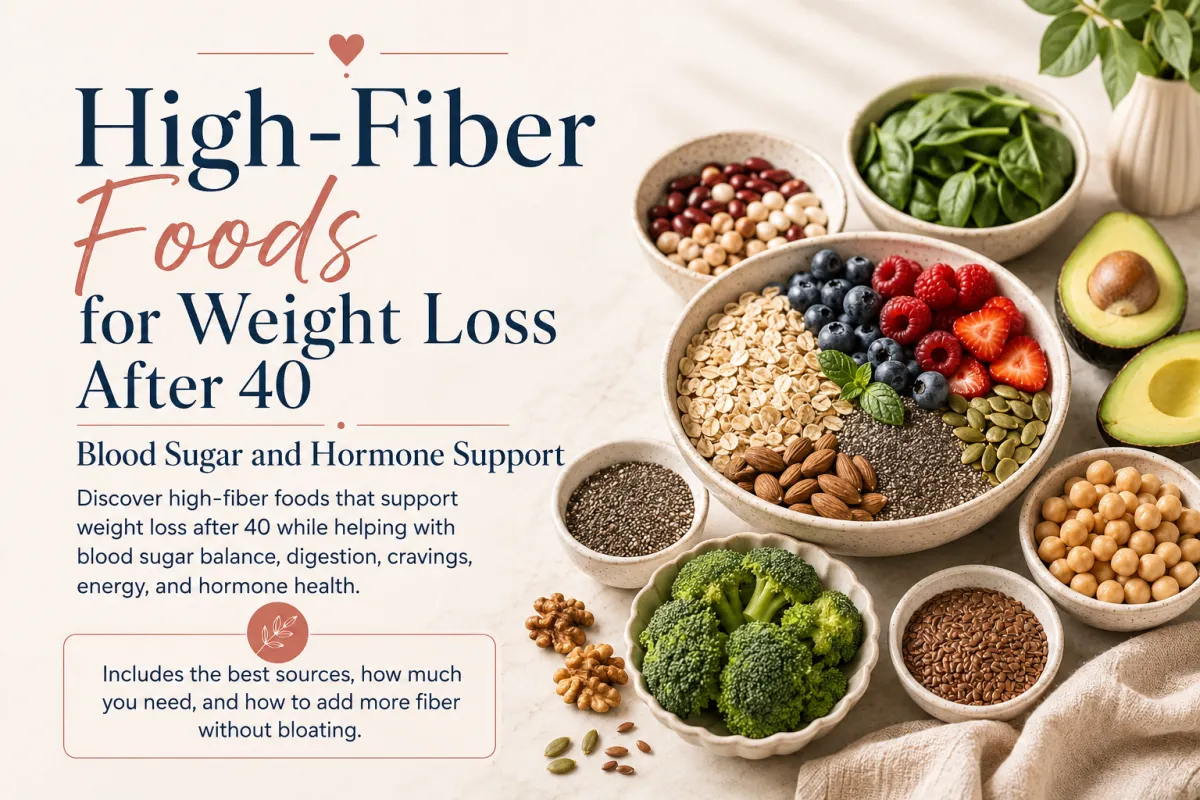
High-Fiber Foods for Weight Loss After 40: Blood Sugar and Hormone Support
High-Fiber Foods for Weight Loss After 40: Blood Sugar and Hormone Support
Fiber is one of the most underrated nutrients for women over 40, yet most of us are not getting enough. If you have been struggling with stubborn weight, blood sugar swings, afternoon cravings, or sluggish digestion, fiber may be the missing piece. This guide covers why fiber matters more after 40, which foods give you the most benefit, and how to increase your intake without the bloating.
Category:Nutrition and Metabolism |Read time:8 minutes
Key Takeaways
Fiber supports weight management after 40 by promoting fullness, steadying blood sugar, and feeding the gut bacteria that influence metabolism and hormones.
Most women are getting only about 15 grams of fiber per day, roughly half the recommended amount.
The best approach is to combine high-fiber foods with adequate protein and healthy fats at each meal.
Increasing fiber gradually, rather than all at once, helps avoid digestive discomfort.
Why Fiber Matters More After 40
When women over 40 think about nutrition for weight support, protein usually comes to mind first. And protein is important. But fiber plays an equally powerful role, and it is the nutrient most women are falling short on.
According to the American Society for Nutrition, only about 9 percent of women in the United States meet the recommended daily fiber intake. The average woman consumes around 15 grams per day, which is roughly half the recommended 25 grams. Many nutrition researchers now describe this as a public health concern.
After 40, fiber becomes even more valuable. Hormonal changes during perimenopause can affect digestion, blood sugar regulation, and how the body stores weight. Fiber helps support all three of these areas, making it one of the most practical nutrients to focus on during this stage of life.
How Fiber Supports Fullness, Digestion, Blood Sugar, and Cravings
Fiber works differently from other nutrients because the body does not fully break it down. Instead, it moves through the digestive system more slowly, which creates several benefits that are especially helpful after 40.
Fullness and Appetite
High-fiber foods take longer to chew and digest, which helps you feel satisfied after meals. This natural feeling of fullness can reduce the urge to snack between meals or overeat later in the day. Unlike calorie restriction, which often backfires after 40, fiber helps the body regulate appetite on its own.
Blood Sugar Balance
Soluble fiber slows the rate at which sugar enters the bloodstream after eating. This means fewer blood sugar spikes and crashes, which in turn supports steadier energy, fewer cravings, and better mood throughout the day. For women who are noticing signs of insulin resistance, fiber is one of the most supportive dietary tools available.
Digestion and Gut Health
Fiber feeds the beneficial bacteria in the gut. These bacteria produce short-chain fatty acids, which support the gut lining, reduce inflammation, and influence how the body processes hormones, including estrogen. A well-functioning gut is closely connected to hormone balance after 40, and fiber is one of the simplest ways to support it.
Cravings
When blood sugar stays more balanced and the gut is better supported, cravings tend to ease. Many women find that increasing fiber alongside protein leads to a noticeable reduction in sugar cravings, especially in the afternoon and evening. If cravings have been a challenge,this guide to managing cravings naturallycovers more strategies that work alongside fiber.
How Fiber Can Support Weight Goals Without Extreme Dieting
Weight management after 40 is rarely as simple as eating less and exercising more. Hormonal shifts, stress, poor sleep, and metabolic changes all play a role. If you have noticed thatdieting has stopped working the way it used to, you are not alone.
Fiber supports a different approach. Rather than restricting calories, it works by helping the body regulate itself more effectively.
A large-scale meta-analysis published in The Lancet in 2019 reviewed 185 prospective studies and 58 clinical trials. It found that higher fiber intake from whole foods was consistently associated with lower body weight, reduced risk of cardiovascular disease, and improved metabolic health. The researchers noted that whole foods containing fiber were more effective than fiber supplements, because they also provide volume, require chewing, and promote natural satiety.
In practical terms, this means that adding more fiber-rich whole foods to your meals can help with weight support without the need for extreme dieting, calorie counting, or cutting out food groups.
Best High-Fiber Foods for Weight Support
The most helpful high-fiber foods combine fiber with other nutrients, particularly protein, healthy fats, and micronutrients that support energy and hormones. Here are some of the best options to include regularly.
Legumes and Pulses
Lentils - around 15 grams of fiber per cooked cup, plus 18 grams of protein
Chickpeas - around 12 grams of fiber per cooked cup, plus 15 grams of protein
Black beans - around 15 grams of fiber per cooked cup
Split peas - around 16 grams of fiber per cooked cup
Legumes are one of the most fiber-dense food groups available. They also provide plant-based protein, iron, and slow-release carbohydrates, which makes them especially useful for blood sugar balance.
Vegetables
Broccoli - around 5 grams of fiber per cooked cup
Brussels sprouts - around 4 grams of fiber per cooked cup
Artichokes - around 10 grams of fiber per medium artichoke
Sweet potatoes - around 4 grams of fiber per medium potato
Leafy greens such as kale and spinach - around 2 to 4 grams per cooked cup
Fruits
Raspberries - around 8 grams of fiber per cup
Pears - around 6 grams of fiber per medium pear
Apples with skin - around 4 grams of fiber per medium apple
Avocado - around 10 grams of fiber per whole avocado
Whole Grains
Oats - around 4 grams of fiber per cooked cup
Quinoa - around 5 grams of fiber per cooked cup
Barley - around 6 grams of fiber per cooked cup
Seeds
Chia seeds - around 10 grams of fiber per 2 tablespoons
Flaxseeds - around 4 grams of fiber per 2 tablespoons
Hemp seeds - around 2 grams of fiber per 3 tablespoons, plus 10 grams of protein
High-Protein and High-Fiber Foods for Weight Support
One of the most effective strategies for weight support after 40 is combining protein and fiber at each meal. Together, they promote fullness, steady blood sugar, support muscle maintenance, and reduce the likelihood of energy dips and cravings.
Some foods naturally provide both. These are especially useful for women who want to simplify their meals without sacrificing nutrition.
Lentils:18 grams of protein and 15 grams of fiber per cooked cup
Chickpeas:15 grams of protein and 12 grams of fiber per cooked cup
Black beans:15 grams of protein and 15 grams of fiber per cooked cup
Edamame:17 grams of protein and 8 grams of fiber per cooked cup
Chia seeds:5 grams of protein and 10 grams of fiber per 2 tablespoons
Quinoa:8 grams of protein and 5 grams of fiber per cooked cup
For a deeper look athow much protein women over 40 needand how to spread it across your day, that post covers the full picture.
High-Fiber Vegetables to Include Regularly
Vegetables are one of the easiest ways to add fiber without adding a lot of calories. They also provide vitamins, minerals, and plant compounds that support hormone health and reduce inflammation.
If you are looking to increase fiber specifically through vegetables, these are the ones to reach for most often:
Artichokes- one of the highest-fiber vegetables, with around 10 grams per medium artichoke
Green peas- around 9 grams of fiber per cooked cup
Broccoli- around 5 grams per cooked cup, plus sulforaphane, which supports estrogen metabolism
Brussels sprouts- around 4 grams per cooked cup, also a good source of vitamin C and vitamin K
Carrots- around 4 grams per cooked cup
Cauliflower- around 3 grams per cooked cup
These vegetables also pair well with a seasonal approach to eating. Choosing what grows naturally in each season supports bothgut health and hormone balance.
How to Add More Fiber Without Getting Bloated
One of the most common reasons women avoid increasing fiber is the fear of bloating, gas, or digestive discomfort. This is a real concern, but it is usually caused by adding too much fiber too quickly, rather than by fiber itself.
Here are some practical ways to increase fiber comfortably:
Increase gradually.Add around 3 to 5 extra grams per day each week, rather than making a sudden jump. This gives your gut bacteria time to adapt.
Drink enough water.Fiber absorbs water as it moves through the digestive system. Without enough fluid, it can slow things down rather than support them.
Start with cooked vegetables.Cooked vegetables are easier to digest than raw ones, especially if your digestion has been sluggish. You can gradually add more raw vegetables as your system adjusts.
Chew well.Digestion begins in the mouth. Taking time to chew thoroughly reduces the workload on your stomach and intestines.
Pair fiber with protein and healthy fats.This slows digestion naturally and reduces the chances of bloating. A meal with lentils, olive oil, and vegetables is much easier to digest than a large bowl of raw salad on its own.
If digestive discomfort has been an ongoing issue, it may be worth looking atwhy digestion can slow down after 40and whether other factors like stress or low stomach acid are playing a role.
Simple High-Fiber Plate Formula
If tracking fiber grams feels like too much effort, a simple plate-based approach can work well. At each meal, aim for:
Half your plate filled with vegetables- a mix of cooked and raw, focusing on the high-fiber options listed above
A palm-sized portion of protein- such as chicken, fish, eggs, lentils, or tofu
A fist-sized portion of fiber-rich carbohydrates- such as sweet potato, quinoa, oats, or beans
A thumb-sized portion of healthy fat- such as olive oil, avocado, or a small handful of nuts or seeds
This combination naturally provides fiber, protein, and fat in a balanced way that supports fullness, blood sugar, and sustained energy. It also aligns well with anapproach to eating that supports hormones, energy, and mood.
How Fiber Connects to Your Bigger Wellness Picture
Fiber does not work alone. It is one part of a broader approach to feeling well after 40 that includes balanced nutrition, good sleep, stress management, and movement.
When fiber intake improves, many women notice benefits beyond weight. Digestion feels smoother, energy becomes steadier, cravings ease, and the gut begins to function more effectively. Because the gut plays such a central role in hormone metabolism, these improvements often ripple outward into other areas of health.
For women navigatingperimenopause symptoms, fiber can help support the body's ability to process and clear excess estrogen through the digestive system. Combined with attention toblood sugar balance,sleep, andnervous system regulation, it becomes part of a more complete foundation for sustainable wellness.
A Gentle Place to Start
You do not need to overhaul your diet to eat more fiber. Start by looking at your current meals and identifying one small shift you could make this week. That might mean adding a handful of berries and a tablespoon of chia seeds to your breakfast. Or swapping white rice for quinoa at dinner. Or adding a cup of lentil soup to your lunch a few times a week.
Small, consistent changes like these add up. Over a few weeks, you may find that your digestion feels smoother, your energy is steadier, and your cravings are easier to manage.
If you would like more structured support with nutrition, hormones, and sustainable wellness after 40, the membership is designed to help you build a foundation that works for your body and your life.