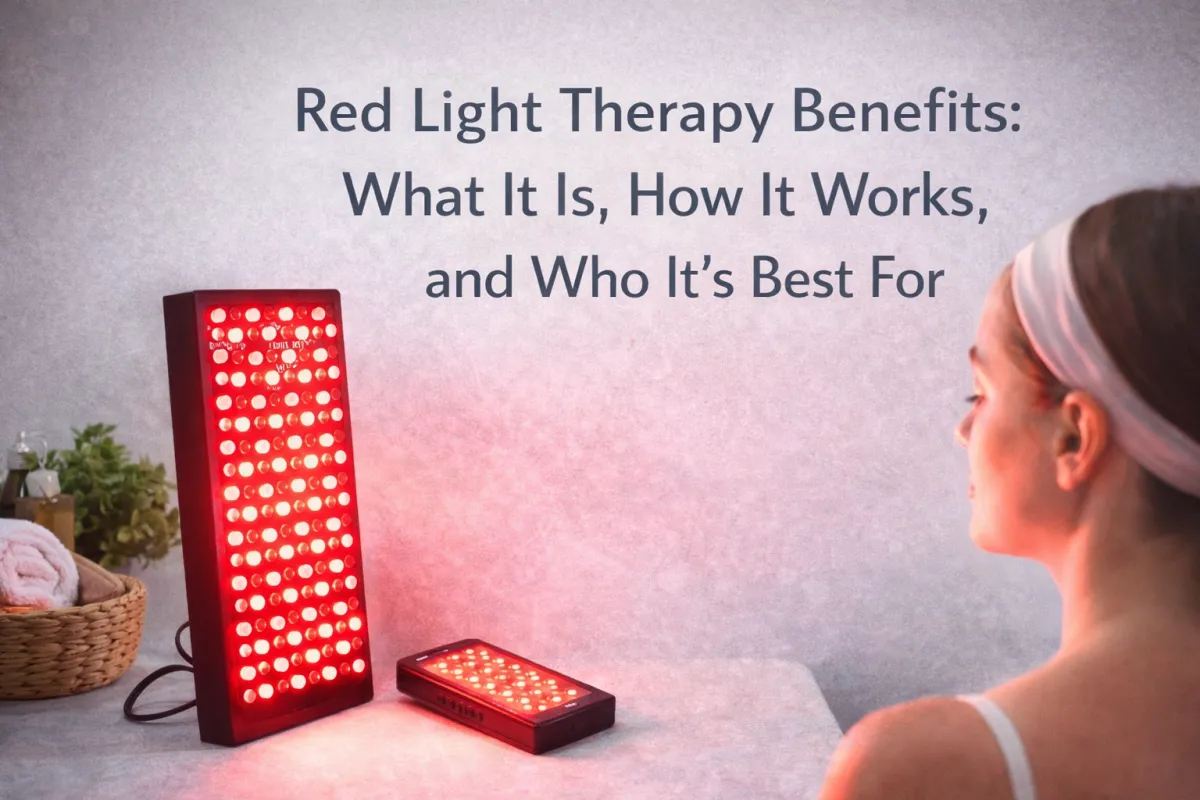
Red Light Therapy Benefits: What It Is, How It Works, and Who It’s Best For
Red Light Therapy Benefits: What It Is, How It Works, and Who It’s Best For
Red light therapy has quickly become one of the most talked about wellness tools for recovery, skin health, and overall vitality. You’ll see it everywhere, from professional clinics to at home devices, but what does it actually do and is it worth adding to your routine?
This guide breaks down what red light therapy is, its potential benefits, and how to use it safely, so you can decide if it’s the right fit for your health goals.
What Is Red Light Therapy?
Red light therapy, also known as photobiomodulation or low level light therapy, uses specific wavelengths of red and near infrared light to penetrate the skin and support cellular function.
These wavelengths interact with your mitochondria, the energy producing centers of your cells, helping them create more ATP or cellular energy. When your cells have more energy available, your body may be better equipped to repair, recover, and regenerate.
If you’re new to red light therapy and want a clear, beginner friendly overview on how to get started safely, the Red Light Therapy Guide inside this month’s membership walks through setup, routines, and practical tips in more detail.
Key Benefits of Red Light Therapy
While research is still evolving, red light therapy shows promising benefits across several areas of health and wellness.
Supports Skin Health and Healthy Aging
Red light therapy is often used to support skin health by reducing inflammation and stimulating collagen production. Many people use it to help improve skin tone and elasticity, soften the appearance of fine lines, calm redness and irritation, and support acne or scar healing.
Because it is non invasive and gentle, it can be used alongside a regular skincare routine without adding extra stress to the skin.
Enhances Muscle Recovery and Reduces Inflammation
One of the most common uses of red light therapy is post workout recovery. By supporting circulation and cellular repair, it may help reduce muscle soreness, support faster recovery after exercise, ease joint stiffness, and assist with tissue healing.
Red light therapy tends to work best when combined with gentle movement and recovery practices. Inside the membership, we also share a Mobility and Recovery Blueprint that pairs well with tools like red light therapy through simple daily routines.
If you’re curious how this looks in practice, you can also explore our guide on using red light therapy at home for recovery focused routines.
Helps Manage Pain and Chronic Discomfort
Because red light therapy may help calm inflammation and support tissue repair, it is often used by people dealing with joint pain, arthritis, back or neck discomfort, and ongoing muscle tension.
Many people find it most helpful when used as part of a broader recovery or pain management approach rather than as a standalone solution.
May Support Hair Growth
Some studies suggest red light therapy may help stimulate hair follicles and improve scalp circulation. This has made it a popular option for those experiencing thinning hair or hair loss.
As with other benefits, consistency matters. Results typically build gradually rather than appearing immediately.
Supports Energy and Overall Well Being
By improving cellular energy production, some people notice subtle benefits such as improved energy levels, better sleep quality, easier recovery from workouts, or a general sense of feeling better day to day.
Results vary depending on consistency, lifestyle habits, and individual health factors.
Using Red Light Therapy at Home vs In Clinic
Red light therapy can be done in professional settings or at home using personal devices.
In clinic treatments often involve higher powered equipment and professional guidance, while at home devices offer convenience and long term cost savings.
If you’re exploring devices, our breakdown of red light therapy devices and best red light therapy panels can help you understand what to look for and how to choose based on your goals.
For those considering professional treatments, you may also want to explore options for red light therapy near you and compare them with at home alternatives.
Is Red Light Therapy Safe?
Red light therapy is generally considered safe when used as directed. However, overuse or improper use may lead to skin irritation or sensitivity.
Basic safety tips include starting with shorter sessions, following manufacturer guidelines closely, using eye protection if recommended, and avoiding use on irritated or damaged skin unless advised by a professional.
If you are pregnant or managing a medical condition, it is always best to check with a healthcare provider first.
How Long Does It Take to See Results?
Results depend on the goal and how consistently red light therapy is used. Some people notice small changes within a few weeks, while others may need several months of regular sessions.
Like most wellness tools, red light therapy works best when used consistently and paired with supportive habits. Inside the membership, we also focus on habit building and consistency strategies to help wellness practices feel sustainable over the long term.
Frequently Asked Questions
Is red light therapy backed by science?
Research is ongoing, but studies support its role in cellular energy production, inflammation reduction, and tissue repair.
How often should red light therapy be used?
Most general guidelines suggest three to five sessions per week, depending on the device and the goal.
Can red light therapy replace other recovery methods?
It works best as a complement to movement, nutrition, and recovery practices rather than a replacement.
Final Thoughts
Red light therapy can be a supportive addition to a well rounded wellness routine. Whether your goal is better recovery, healthier skin, or improved energy, it offers a low risk, non invasive option worth exploring.
If you want guided support, routines, and practical next steps, this month’s Red Light Therapy Guide inside the membership walks you through how to use it safely and effectively in real life.
This post is for educational purposes only and does not replace medical advice.
*Some links on this blog are affiliate links, which means you will receive a discount, and I may earn a small commission at no additional cost to you if you make a purchase through them. I only recommend products and services I personally use and believe will add value and benefits to my clients.